|
MIT PROLOGUE
With the
dawn of Independence, the need for establishing a sound technological
basis for proper industrial advancement of the country was realised.
At a time
when all other engineering institutions were offering conventional
courses in Civil, Mechanical and Electrical engineering at the
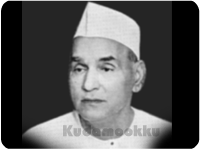
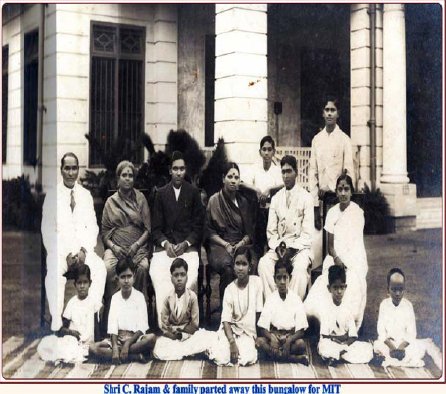
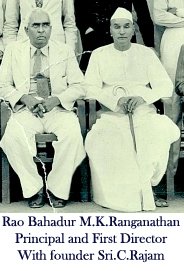
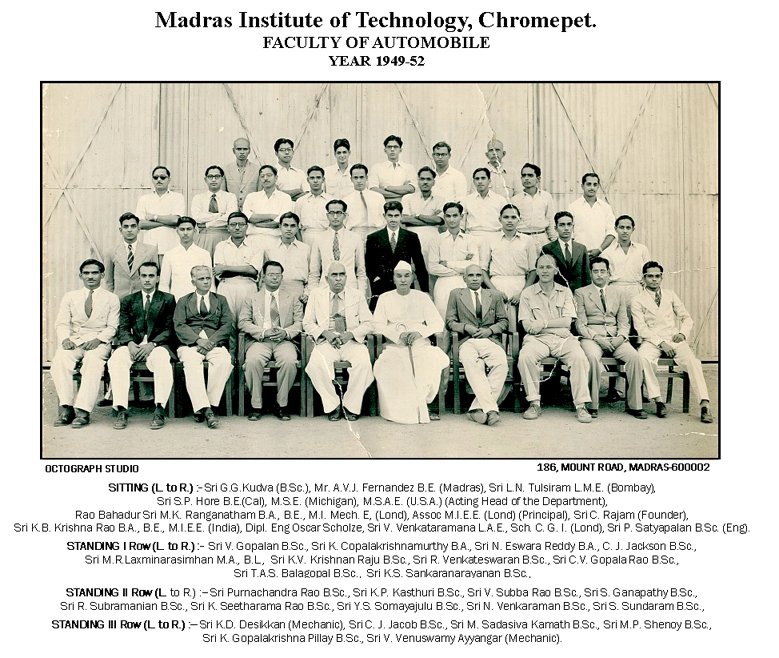
undergraduate level, In the year 1949,Sri. C.Rajam launched the
experiment of introducing for the first time in the country
for Bachelor of science graduates,totally new areas of specialisation
in Engineering, namely Aeronautical
engineering, Automobile engineering,Electronics engineering, and
instrument technology, the entrants to these
disciplines being science graduates. This was a boon for students
missed entry to five year BE, after passing out PUC. Of course ,after
B.Sc,DMIT course is for three years ,totalling to six years,in
comparison to BE.
Instrumentation
and Control did not exist in India as a subject of study in 1949; even
the name was still below the horizon. Now this branch of applied
science and technology has become important in industry, and a
significant number of the past students of M.I.T. now hold key
positions in research and development organisations, manufacturing
industries and educational institutions within the country and abroad.
In the year 1978 ,MIT merged
with Anna University. Introduced five additional courses namely
Production Technology,Rubber and Plastics Technology, Information
Technology, Computer Technology and Applied Science & Humanities.
After completion of four years,degree offered is B.Tech. ,with entry
level after plus 2.
The MIT is the
Premier institute in India to offer postgraduate courses in Avionics
and Mechatronics. MIT alsohaveComputer science
and Information technology departments.
MIT
also offers technical education in engineering fields such asRubber and
Plastics technology, Production engineering, and information
technology. Research centres were also started in the past years.
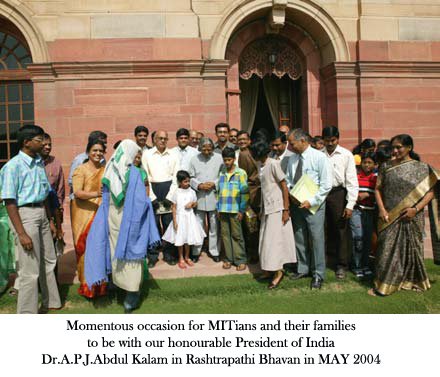
The alumni of this
institute have achieved prominence in various fields like Dr.
A.P.J. Abdul Kalam (the "missile-man of India"), and the
famous writer Rangarajan (Pen name Sujatha )among others.
Likewise,many from MIT had key positions in their official carrier in
various Government/Private institutions.
MIT
has the unique practice of 'T-series'. This is a
mentorship system and the word is said to have originated from the term
Technocrat. Each new 'technocrat' of the institute is assigned to a
mentor from the previous batch. He / she also inherits the complete set
of 'T-seniors' from this mentor. Mentorship activities span a whole
gamut of student activities starting from passing on books up to job
interview preparation tips. Like all major universities, it helps build
an alumni network in industries, boosting the credentials of the
university as well as providing valuable human resource for the firms.
MIT
has its own annual magazine MITMAG.Apart from this,Personality
Development Association (PDA) has successfully published its magazine
PERSOPLUS twice last year and Youth Red Cross published its magazine
called Vircham in 2008 related to Social Awareness. Computer Society of
MIT publishes its periodic magazine KALEIDOSCOPE from 2010 onwards.
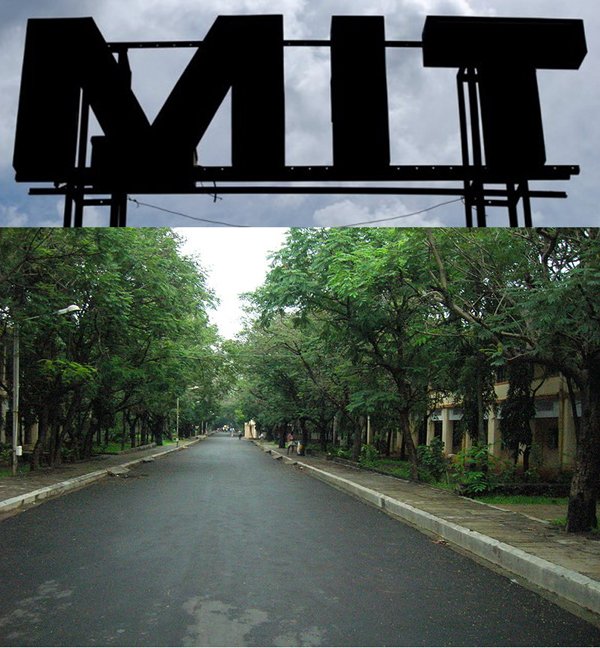
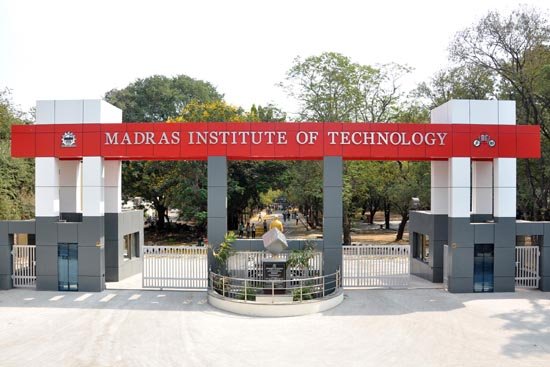
The Madras
Institute of Technology (MIT) is located in Chromepet, Madras
(Chennai), India.Presently it is one of the four autonomous constituent
colleges of Anna University.
---------------------------------------------------------------------------------------------------------------------------------------------------------------------------------------------------
MITAA
(Madras Institute of Technology Alumni Association)
MITAA when started,
the main purpose was that Alumni Association should play a catalytic
role in bringing the alumni together, so as to:
-
Preserve the tremendous espirit-de-corps, MIT
was always famous for;
-
Develop a
network, where an alumnus can get whatever help he or she needs from
another, and every member can draw up the "alumni
resources" to achieve outstanding success
in their field..
|